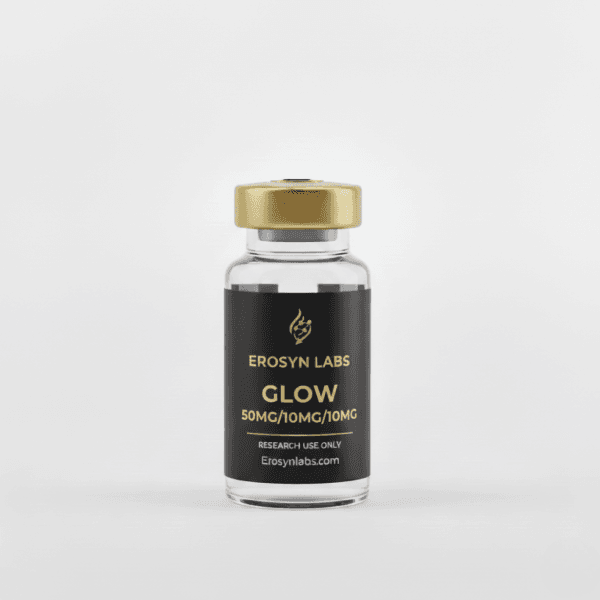

Kisspeptin refers to a family of peptide fragments derived from the KISS1 gene product, with Kisspeptin-10 (the C-terminal decapeptide) being the most commonly used form in research. Kisspeptin-10 has the sequence Tyr-Asn-Trp-Asn-Ser-Phe-Gly-Leu-Arg-Phe-NH₂ and a molecular weight of approximately 1,302.45 Da. This peptide acts as the endogenous ligand for the KISS1R receptor (formerly GPR54), a G-protein coupled receptor that plays a central role in reproductive neuroendocrinology research.
In hypothalamic neuronal cell models, Kisspeptin activates KISS1R through Gq/11-coupled signaling, resulting in phospholipase C activation, intracellular calcium mobilization, and PKC activation. This signaling cascade is a potent stimulus for gonadotropin-releasing hormone (GnRH) neuron activation in preclinical models. Kisspeptin-KISS1R signaling has been identified as a critical gatekeeper of the hypothalamic-pituitary-gonadal (HPG) axis in extensive preclinical research, making Kisspeptin an essential tool for reproductive biology investigation.
In GnRH-secreting cell lines (e.g., GT1-7 neurons), Kisspeptin treatment has been shown to stimulate GnRH release in a concentration-dependent manner. Electrophysiological recordings from hypothalamic slice preparations demonstrate that Kisspeptin depolarizes GnRH neurons and increases action potential firing frequency. These effects are abolished by KISS1R antagonists, confirming receptor-mediated specificity.
Beyond reproductive neuroendocrinology, Kisspeptin research extends to cancer biology, where KISS1 was originally identified as a metastasis suppressor gene. In various tumor cell lines, Kisspeptin-KISS1R signaling has been associated with reduced cell migration and invasion as measured by Boyden chamber assays. Anti-angiogenic properties have been observed in endothelial cell models. Additional research applications include placental biology, as Kisspeptin is highly expressed in trophoblast cells, and metabolic research examining interactions between reproductive and metabolic signaling pathways.
Upon availability, Erosyn Labs will supply Kisspeptin-10 as a lyophilized powder at ≥98% purity by HPLC with full Certificate of Analysis. Reconstitution in sterile water or dilute acetic acid (0.1%) is recommended. Store lyophilized material at -20°C; reconstituted solutions at -80°C for long-term or 2–8°C for short-term experimental use.
For research and laboratory use only. Not for human consumption.